GRS Series 2026
A recurring Graduate Research Student (GRS) seminar series for students to present progress, pilot ideas, and engage with peers and staff. Weekly sessions from July to November 2026 (Adelaide time). Schedule is tentative until speakers are confirmed.
Program (tentative)
| Week | Date | Topic | Speaker | Location |
|---|---|---|---|---|
| 1 |
27 Jul 2026 16:00–17:00 |
Prof Bruce H. Thomas
|
CE: Ingkarni Wardli 5.57 (IW5.57); ML: Mawson Lakes Building J, J2-15 | |
| 2 |
3 Aug 2026 16:00–17:00 |
A/Prof Lingqiao Liu
|
CE: Napier 108; ML: Mawson Lakes Building J, J2-15 | |
| 3 |
10 Aug 2026 16:00–17:00 |
|
Naeem Paeedeh (student presentation)
Ishara Udayanthi Hewa Pathiranage (student presentation)
|
CE: Napier 108; ML: Mawson Lakes Building J, J2-15 |
| 4 |
17 Aug 2026 16:00–17:00 |
Professor Tat-Jun Chin
|
CE: Ingkarni Wardli 5.57 (IW5.57); ML: Mawson Lakes Building J, J2-15 | |
| 5 |
24 Aug 2026 16:00–17:00 |
|
Dr Kaining Zhang (recent graduate presentation)
Spencer O'Keeffe (recent graduate presentation)
|
CE: Ingkarni Wardli 5.57 (IW5.57); ML: Mawson Lakes Building J, J2-15 |
| 6 |
31 Aug 2026 16:00–17:00 |
Professor Wolfgang Mayer
|
CE: Ingkarni Wardli 5.57 (IW5.57); ML: Mawson Lakes Building J, J2-15 | |
| 7 |
7 Sep 2026 16:00–17:00 |
Professor Yuval Yarom
|
CE: Ingkarni Wardli 5.57 (IW5.57); ML: Mawson Lakes Building J, J2-15 | |
| 8 |
14 Sep 2026 16:00–17:00 |
Hu Wang, Khalifa University
|
CE: Ingkarni Wardli 5.57 (IW5.57); ML: Mawson Lakes Building J, J2-15 | |
| 9 |
21 Sep 2026 16:00–17:00 |
Dr Yuankai Qi, Macquarie University
|
CE: Ingkarni Wardli 5.57 (IW5.57); ML: Mawson Lakes Building J, J2-15 | |
| 10 |
28 Sep 2026 13:00 |
Dr Ana Stanescu, Graz University of Technology
|
Online (Zoom) | |
| 11 |
5 Oct 2026 Break |
—
|
— | |
| 12 |
12 Oct 2026 16:00–17:00 |
Professor Simon Ratcliffe, Yuri Vilmanis and Ashley Harris
|
CE: Ingkarni Wardli 5.57 (IW5.57); ML: Mawson Lakes Building J, J2-15 | |
| 13 |
19 Oct 2026 16:00–17:00 |
Professor Florian 'Floyd' Mueller, Monash University
|
CE: Ingkarni Wardli 5.57 (IW5.57); ML: Mawson Lakes Building J, J2-15 | |
| 14 |
26 Oct 2026 16:00–17:00 |
Congbo Ma, NYU Abu Dhabi
|
CE: Ingkarni Wardli 5.57 (IW5.57); ML: Mawson Lakes Building J, J2-15 | |
| 15 |
2 Nov 2026 16:00–17:00 |
Volunteer (TBC)
|
CE: Ingkarni Wardli 5.57 (IW5.57); ML: Mawson Lakes Building J, J2-15 |
Session details
-
GRS seminar
27 Jul 2026 · 16:00–17:00
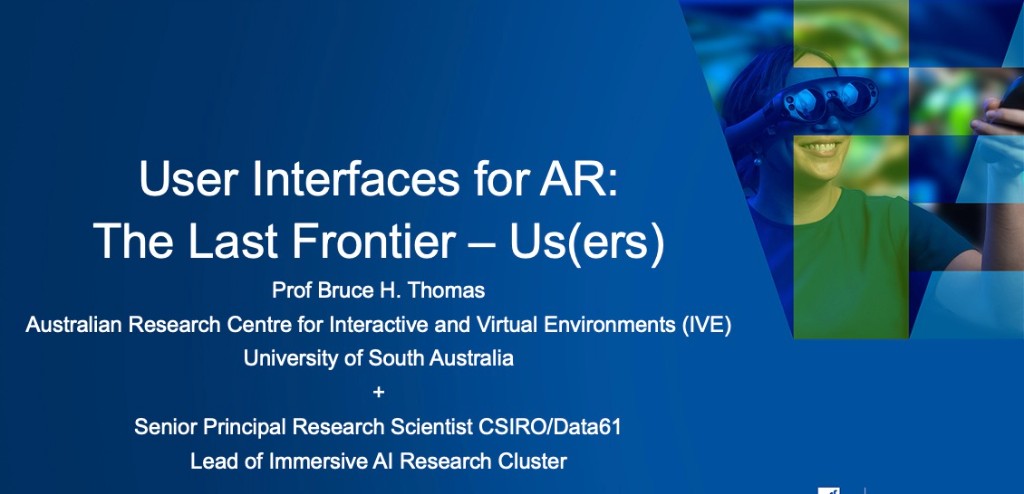
- Speaker:
- Prof Bruce H. Thomas
- Date and Time:
- Monday 27 July 2026, 16:00–17:00 (Adelaide)
- Title:
- User Interfaces for AR: The Last Frontier – Us(ers)
- Location:
- CE: Ingkarni Wardli 5.57 (IW5.57); ML: Mawson Lakes Building J, J2-15
- Abstract:
- User interfaces are the boundary between humans and Augmented Reality technology. These user interfaces incorporate the visual presentation of information, virtual controls for the applications, and physical devices to enhance users’ abilities to build a mental model that blends the physical world and the virtual world created for them. This is a very difficult problem to solve. Many smart scientists have investigated this problem for decades. This talk will investigate this research from the point of view of where we came from, where we are at the current moment, and possible future directions we could go. Part of this journey is a discussion of why this is a difficult problem. AR user interfaces are more difficult to design than traditional 2D desktops, handheld devices, and (I would argue) Virtual Reality interfaces. While AR user interfaces research is challenging, it is quite rewarding. The talk hopefully will motivate more researchers to investigate this topic.
- Bio:
- Professor Thomas is currently Emeritus Professor at the Adelaide University. His current research interests include the following: user interfaces, augmented reality, virtual reality, visualisation, wearable computers, CSCW, tabletop display interfaces, and the use of cognitive psychology in virtual environments research. He has served in many roles for the IEEE International Symposium on Mixed and Augmented Reality, IEEE Virtual Reality, and IEEE/ACM International Symposium on Wearable Computers, including program chair, general chair and on the steering committee. He also founded the ACM Interactive Surfaces and Spaces Conference (formerly IEEE Tabletop). He was awarded the ACM International Symposium on Wearable Computers (ISWC) 20-Year Impact Award. Prof. Thomas’ academic qualifications include the following: a BA in Physics from George Washington University, an MS in Computer Science from the University of Virginia, and a PhD in Computer Science from Flinders University.
-
GRS seminar
3 Aug 2026 · 16:00–17:00
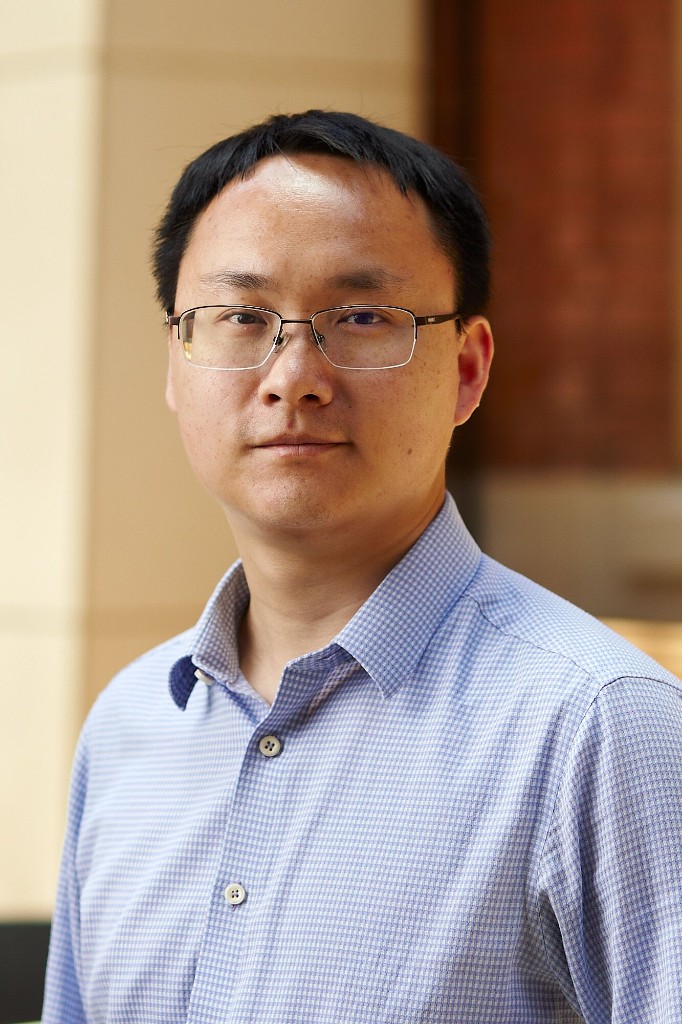
- Speaker:
- A/Prof Lingqiao Liu
- Date and Time:
- Monday 3 August 2026, 16:00–17:00 (Adelaide)
- Title:
- Learning Beyond Parameters: Optimising Prompts, Programmes, Workflows and Algorithms in the LLM Era
- Location:
- CE: Napier 108; ML: Mawson Lakes Building J, J2-15
- Abstract:
- The rapid advancement of large language models is transforming not only AI applications, but also what it means for a system to learn. While conventional machine learning focuses on parameter optimisation, modern LLM-based systems expose many additional components that can be optimised, including prompts, programmes, workflows and even algorithms. This seminar examines this shift through three questions: what to learn, how to learn, and what new capabilities this enables. Representative approaches across prompt optimisation, programme optimisation, workflow search and algorithm discovery will be discussed alongside techniques such as textual feedback, evolutionary search, tree search and self-improving agents. We conclude by outlining open challenges and opportunities for building AI systems that can improve not only models but entire problem-solving processes.
- Bio:
- Lingqiao Liu is an Associate Professor at the School of Computer Science, The University of Adelaide, Australia, and an Academic Member of the Australian Institute for Machine Learning. He received the ARC DECRA (Discovery Early Career Researcher Award) in 2016 and the University of Adelaide Research Fellowship in the same year. His research spans machine learning, computer vision, and natural language processing, with the objective of building practical machine learning systems that are more data efficient and generalisable for real-world applications. His current major research topics include low-supervision machine learning (semi-supervised learning, unsupervised learning, few-shot and zero-shot learning), generalisable machine learning systems (domain generalisation, compositional generalisation), computer vision applications (dense prediction, fine-grained recognition, content generation), and natural language processing applications (low-resource NLP and generalisation of NLP systems).
-
GRS seminar
10 Aug 2026 · 16:00–17:00
- Speaker:
- Naeem Paeedeh (student presentation)
- Date and Time:
- Monday 10 August 2026, 16:00–17:00 (Adelaide)
- Title:
- Learning Forever Across Varying Domains
- Location:
- CE: Napier 108; ML: Mawson Lakes Building J, J2-15
- Abstract:
- What if a neural network, the brain of an intelligence system, navigates an ever-changing world? While they can be trained to perform new tasks, they need to practice repeatedly or see a large number of samples. Moreover, as they continually learn new tasks, they forget most of the knowledge learned in past sessions. In this session, two novel methods will be discussed that help transformers efficiently learn new domains while preserving prior knowledge, without altering the networks' valuable original weights or storing any past samples. First, a novel method will be introduced that helps the network absorb both generalizable and shared knowledge across domains while also learning the nuances of each new domain. Second, a new method will be presented for an even more challenging setting of having a handful of samples by combining visual and linguistic knowledge of the world.
- Bio:
- Naeem is a PhD student in the School of Computer Science and IT. His research focuses on developing machine learning methods that enable neural networks to operate in dynamic environments with very limited labeled data. His interests are in few-shot learning, continual learning, domain adaptation, and vision-language models. He has developed transformer-based methods, the current dominant, most powerful yet data-hungry architecture of neural networks, to help them adapt rapidly from a few observations while becoming resilient to sudden and drastic shifts in the environment and to catastrophic forgetting.
-
GRS seminar
10 Aug 2026 · 16:00–17:00
- Speaker:
- Ishara Udayanthi Hewa Pathiranage (student presentation)
- Date and Time:
- Monday 10 August 2026, 16:00–17:00 (Adelaide)
- Title:
- On the Use of Bi-Objective Evolutionary Algorithms for the Stochastic Multiple Knapsack Problem under Dynamic Constraints
- Location:
- CE: Napier 108; ML: Mawson Lakes Building J, J2-15
- Abstract:
- The multiple knapsack problem (MKP) generalizes the classical knapsack problem by assigning items to multiple knapsacks subject to capacity constraints. It is used to model many real-world resource allocation and scheduling problems. In practice, these optimization problems often involve stochastic and dynamic components. Evolutionary algorithms provide a flexible framework for addressing such problems under uncertainty and dynamic changes. In this paper, we investigate a stochastic and dynamic variant of MKP with chance constraints, where the item weights are modeled as independent normally distributed random variables and knapsack capacities change during the optimization process. We formulate the problem as a bi-objective optimization formulation that balances profit maximization and probabilistic capacity satisfaction at a given confidence level. We conduct an empirical comparison of four widely used multi-objective evolutionary algorithms (MOEAs), representing both decomposition- and dominance-based search paradigms. The algorithms are evaluated under varying uncertainty levels, confidence thresholds, and dynamic change settings. The results provide comparative insights into the behavior of decomposition-based and dominance-based MOEAs for stochastic MKP under dynamic constraints.
-
GRS seminar
17 Aug 2026 · 16:00–17:00
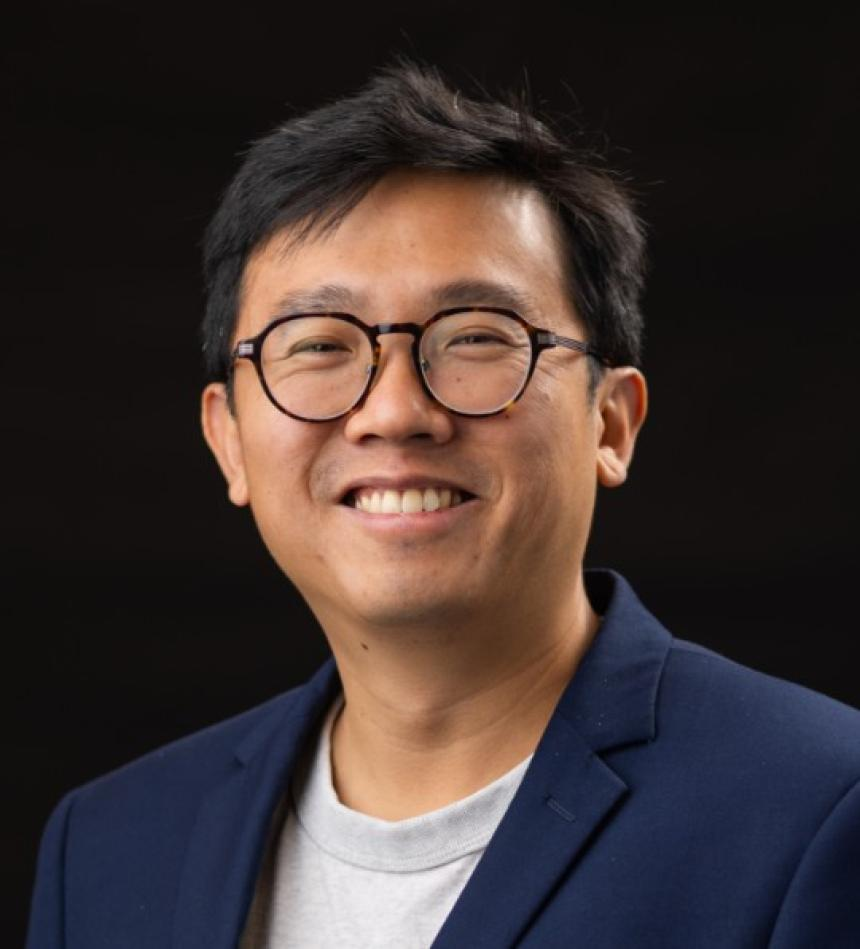
- Speaker:
- Professor Tat-Jun Chin
- Date and Time:
- Monday 17 August 2026, 16:00–17:00 (Adelaide)
- Title:
- Why do we publish?
- Location:
- CE: Ingkarni Wardli 5.57 (IW5.57); ML: Mawson Lakes Building J, J2-15
- Abstract:
- Many research students start their PhD journey by asking "how many papers do I need to publish to get the PhD". Similarly, many PhD supervisors set expectations in terms of the number of papers published, as well as the desired ranking of the publication venues (conferences, journals). At departmental and institutional levels, academic leaders use publication metrics to evaluate the performance of research groups and individual researchers. At governmental levels and society at large, academic league tables are often used to compare the performance of universities, and the publication statistics of an institution influence greatly the position of the institution in such rankings. With the current attitudes towards publishing entrenched and the "industry" of publishing strong and pervasive, there is the risk of losing sight of the reason for and the value of publishing towards scientific research. This talk aims to (re)ignite conversations on why we publish.
- Bio:
- Tat-Jun Chin is Professor of Computer Science at Adelaide University, where he leads the AI for Space Group. He received his PhD in Computer Systems Engineering from Monash University in 2007, which was partly supported by the Endeavour Australia-Asia Award, and a Bachelor in Mechatronics Engineering from Universiti Teknologi Malaysia in 2004, where he won the Vice Chancellor’s Award. Tat-Jun’s research interest lies in optimisation for computer vision and machine learning, and their application to intelligent satellites and space robotics. He has published more than 150 research articles on the subject, and has received multiple accolades for his research, including a CVPR award (2015), a BMVC award (2018), Best of ECCV (2018), three DST Awards (2015, 2017, 2021), an IAPR Award (2019), an RAL Best Paper Award (2021), and a nomination for ECCV Best Paper Award (2024). He was a Finalist in the Academic of the Year Category at Australian Space Awards 2021. Tat-Jun is currently Visiting Professor at the European Space Agency's Philab and was a SmartSat CRC Professorial Chair in 2020-2025.
- Online:
- Join online
-
GRS seminar
24 Aug 2026 · 16:00–17:00
- Speaker:
- Dr Kaining Zhang (recent graduate presentation)
- Date and Time:
- Monday 24 August 2026, 16:00–17:00 (Adelaide)
- Title:
- Decoding Input Preferences and Switch-Intention from Implicit Signals
- Location:
- CE: Ingkarni Wardli 5.57 (IW5.57); ML: Mawson Lakes Building J, J2-15
- Abstract:
- Adaptive interactive systems need to understand not only what users are doing, but also how they experience and respond to different interaction methods. This research investigates whether physiological and behavioural signals can provide implicit evidence of users’ input preference and reported switch-intention, with a particular focus on augmented reality (AR) interaction. Across three empirical studies, we examine whether EEG can differentiate preferred and non-preferred hand-based input methods, whether preference-related EEG patterns remain detectable during realistic AR interaction, and whether multimodal signals, including EEG, eye gaze, and head movement, can predict users’ reported trial-level intention to switch input methods. The findings highlight the potential of implicit sensing for understanding dynamic user states during interaction and inform the design of more adaptive and user-centred interactive systems.
- Bio:
- Kaining Zhang is a Postdoctoral Teaching Fellow at Adelaide University and an HCI researcher working at the intersection of augmented and mixed reality, multimodal interaction, and implicit sensing. She recently passed her PhD defense, with her doctoral research investigating how physiological and behavioural signals, including EEG, eye gaze, and head movement, can be used to infer users’ input preferences and interaction intentions. Her broader research interests include adaptive and intelligent interactive systems, implicit user-state modelling, and interaction design for emerging computing environments. She is particularly interested in how interactive systems can better understand users and adapt to their changing needs while preserving user agency and control.
-
GRS seminar
24 Aug 2026 · 16:00–17:00
- Speaker:
- Spencer O'Keeffe (recent graduate presentation)
- Date and Time:
- Monday 24 August 2026, 16:00–17:00 (Adelaide)
- Title:
- Action Research with Industry
- Location:
- CE: Ingkarni Wardli 5.57 (IW5.57); ML: Mawson Lakes Building J, J2-15
- Abstract:
- Working with an industry partner provides researchers with domain expertise, relevant data, and tangible context for research projects, but brings a unique set of challenges. This talk will provide an overview of a PhD focused on immersive analytics in forestry, covering the action research methodology taken, how findings guided the research direction, opportunities arisen, and observations for new researchers engaging in industry partnered projects.
- Bio:
- Spencer O’Keeffe recently defended his PhD with the Wearable Computer Lab and the Forestry Centre of Excellence. His cross-disciplinary research spans Immersive Analytics and Forestry, exploring how extended reality, LiDAR, and advanced data visualisation can support decision-making, training, and planning in complex forestry systems. His work is conducted in close collaboration with industry partners, including OneFortyOne Mt Gambier. His current research interests include pine disease detection from LiDAR, machinery safety training in VR, and point clouds.
-
GRS seminar
31 Aug 2026 · 16:00–17:00
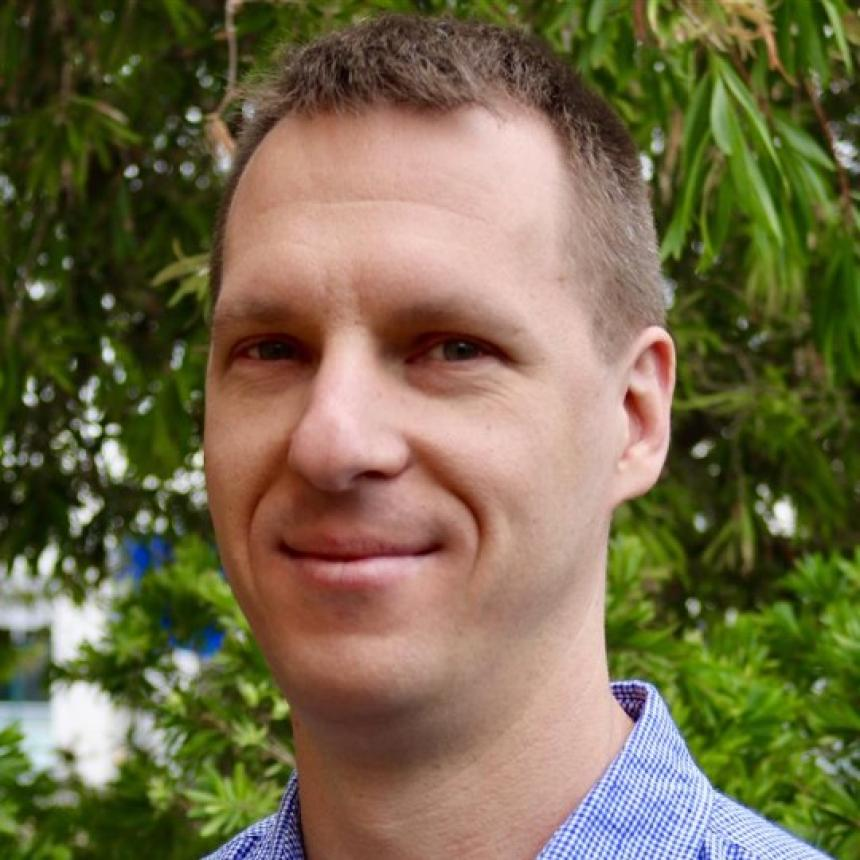
- Speaker:
- Professor Wolfgang Mayer
- Date and Time:
- Monday 31 August 2026, 16:00–17:00 (Adelaide)
- Title:
- AI and Software Engineering: When writing code is no longer the bottleneck
- Location:
- CE: Ingkarni Wardli 5.57 (IW5.57); ML: Mawson Lakes Building J, J2-15
- Abstract:
- The presentation explores how increasingly capable AI may reshape software engineering by focusing on three fundamental questions: If writing and rewriting code is no longer the bottleneck, what becomes the difficult part of software engineering? Do traditional concerns such as architecture, design, maintainability, and technical debt still matter when AI can change software at scale? And what does this shift mean for the skills and research problems that will matter in the future? Drawing on ideas from Brooks, Parnas, Dijkstra, Beck, Fowler, and Karpathy, the talk examines how AI shifts attention from producing code to determining what should be built, managing system-level consequences, and ensuring that generated solutions are appropriate and trustworthy.
- Bio:
- Professor Wolfgang Mayer's research combines machine learning, knowledge representation and semantic technologies to develop trustworthy AI for complex real-world systems. His research spans knowledge graphs, ontology engineering, few-shot and continual learning, reinforcement learning, natural language processing, digital twins and semantic interoperability. A central theme is the integration of data-driven and knowledge-driven AI to support reasoning and decision-making when data are heterogeneous, limited or distributed across organisational boundaries. His work is strongly application-oriented, with projects across Defence, advanced manufacturing, healthcare, engineering and asset management.
-
GRS seminar
7 Sep 2026 · 16:00–17:00
- Speaker:
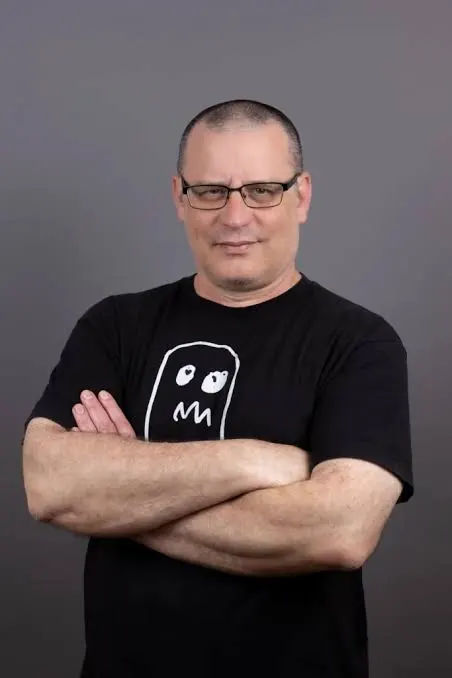
- Professor Yuval Yarom
- Date and Time:
- Monday 7 September 2026, 16:00–17:00 (Adelaide)
- Title:
- Emergent behaviour in computer microarchitecture
- Location:
- CE: Ingkarni Wardli 5.57 (IW5.57); ML: Mawson Lakes Building J, J2-15
- Abstract:
- Modern CPUs consist of a large number of circuits, data structures and algorithms, collectively called the microarchitecture. Six decades of advances in microarchitectural design have yielded the highly optimised CPUs that drive our current, digital society. Although these optimisations are critical for computer performance, unintended interactions between microarchitectural components can leak sensitive information. Much effort has been invested into exploiting such emergent behaviour, identifying attacks and designing defences. In this talk we shift the focus to exploring the fundamental capabilities of this emergent behaviour. We discuss a recent construct called "weird gates" and examine its computational capabilities and temporal sensitivity. We demonstrate that weird gates allow arbitrary (Turing complete) computation on microarchitectural state and show their utility for various tasks, including overcoming defences, reverse engineering and code obfuscation.
- Bio:
- Yuval Yarom is a Professor of Computer Security at Ruhr University Bochum in Germany. His research focuses on the interface between the software and the hardware. In particular, He is interested in the discrepancy between the way that programmers think about software execution and the concrete execution in modern processors. He is a recipient of a 2020 ARC Discovery Early Career Award and the 2020 CORE Chris Wallace Award for Outstanding Research, a 2020 Young Tall Poppy. Previously, he has been an Associate Professor at the University of Adelaide, the Vice President of Research in Memco Software, and a co-founder and Chief Technology Officer of Girafa.com. Yuval earned his Ph.D. in Computer Science from the University of Adelaide in 2014, and an M.Sc. in Computer Science and a B.Sc. in Mathematics and Computer Science from the Hebrew University of Jerusalem in 1993 and 1990, respectively.
-
GRS seminar
14 Sep 2026 · 16:00–17:00
- Speaker:
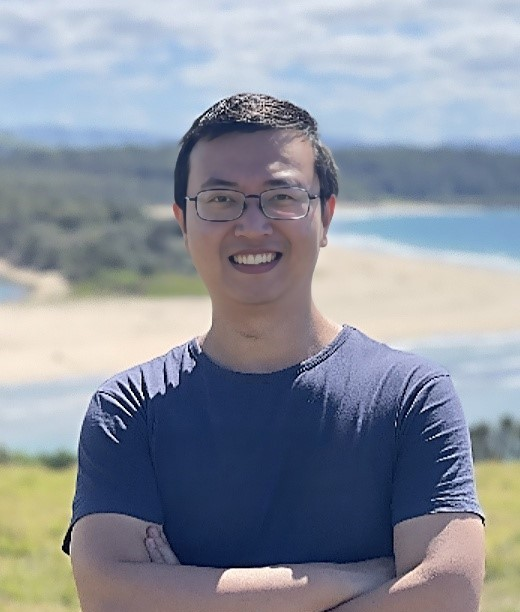
- Hu Wang, Khalifa University
- Date and Time:
- Monday 14 September 2026, 16:00–17:00 (Adelaide)
- Title:
- At the Intersection of Multi-modal Representation Learning and Large Models
- Location:
- CE: Ingkarni Wardli 5.57 (IW5.57); ML: Mawson Lakes Building J, J2-15
- Abstract:
- This talk explores the intersection of multi-modal representation learning and large models, with a focus on building robust, efficient, and adaptive AI systems. I will present our recent work on multi-modal learning, efficient vision-language models, and further discuss sequential decision making and reinforcement learning for large model reasoning. Together, these efforts point toward more capable multi-modal large models and self-evolving AI systems. I will also briefly share some information on the development of research, and higher education in the UAE universities, and the opportunities they offer for AI research and collaboration.
- Bio:
- I am an Assistant Professor at Khalifa University, which is currently ranked #147 in the QS World University Rankings. My research interests lie in language model reasoning, self-evolving and self-learning AI models, multi-agent systems, and representation learning. Before joining Khalifa University, I worked as an Assistant Professor of Practice and a Research Scientist at Mohamed bin Zayed University of Artificial Intelligence (MBZUAI). Prior to that, I worked as a Research Fellow at the Australian Institute for Machine Learning (AIML), University of Adelaide, where I also received my Ph.D. degree. My research has been published in leading conferences and journals, including CVPR, ECCV, ICCV, NeurIPS, IJCAI, AAAI, ACM MM, MICCAI, ICASSP, and ACM Computing Surveys. Website: https://huwang01.github.io/
-
GRS seminar
21 Sep 2026 · 16:00–17:00

- Speaker:
- Dr Yuankai Qi, Macquarie University
- Date and Time:
- Monday 21 September 2026, 16:00–17:00 (Adelaide)
- Title:
- From Reasoning to Control: Distilling Control-Relevant Summaries via Latent Workspaces
- Location:
- CE: Ingkarni Wardli 5.57 (IW5.57); ML: Mawson Lakes Building J, J2-15
- Abstract:
- Explicit physical reasoning can improve policy learning in vision-language-action (VLA) models, but generating it at deployment adds inference cost. We propose a VLA framework that internalizes physical reasoning through control-summary self-distillation, enabling closed-loop control without explicit reasoning generation at deployment. Our framework learns from diverse physical reasoning in a modality-agnostic workspace and uses action supervision to shape what is transferred through its control summary. During self-distillation, a student uses only observations and instructions to match the control summary of a frozen teacher with access to explicit reasoning, without directly aligning their workspace states. Experiments on simulation benchmarks and real-world manipulation tasks show favourable performance compared to several state-of-the-art VLA methods, with average success rates of 98.6% on LIBERO, 73.2% on LIBERO-PLUS, and 77.3% across three real-world tasks. The deployed policy achieves an inference latency of 101 ms on an NVIDIA A100 GPU. Ablations further support the control summary as an effective target for transferring the benefits of physical reasoning to robot control.
- Bio:
- Dr Yuankai Qi is an ARC Future Fellow and Lecturer in Artificial Intelligence at Macquarie University. His research focuses on computer vision, multimodal learning, and embodied AI, with applications in robotics, medical imaging, and video understanding. He has published more than 80 papers in leading AI and computer vision venues, including CVPR, ICCV, ECCV, NeurIPS, AAAI, and IEEE TPAMI. His research has received several recognitions, including the ACM Multimedia 2024 Best Paper Award, ICPR 2024 Best Student Paper Award, and the CAAI Outstanding Doctoral Dissertation Award. He was also recognised among the Stanford/Elsevier World’s Top 2% Scientists in 2024 and 2025.
-
GRS seminar
28 Sep 2026 · 13:00
- Speaker:
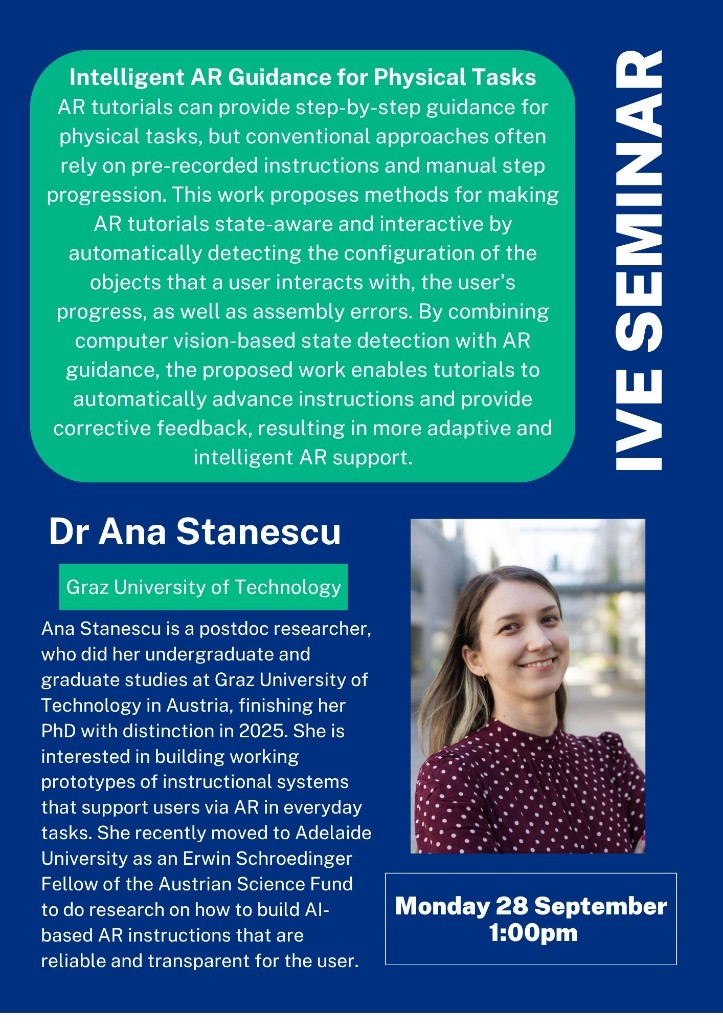
- Dr Ana Stanescu, Graz University of Technology
- Date and Time:
- Monday 28 September 2026, 13:00 (Adelaide)
- Title:
- Intelligent AR Guidance for Physical Tasks
- Location:
- Online (Zoom)
- Abstract:
- GRS Series — Week 10 of 15 (online only; replacing Professor Claudia Szabo). The talk covers making AR tutorials state-aware and interactive instead of relying on pre-recorded steps and manual progression. The approach uses computer vision to detect object configuration, track user progress, and catch assembly errors, so the AR guidance can auto-advance instructions and give corrective feedback.
- Bio:
- Ana Stanescu is a postdoc researcher who did her undergraduate, graduate, and PhD (with distinction, 2025) at Graz University of Technology. She works on AR instructional systems for everyday tasks. She recently moved to Adelaide University as an Erwin Schroedinger Fellow of the Austrian Science Fund, researching reliable and transparent AI-based AR instructions.
- Online:
- Join online
-
GRS seminar
5 Oct 2026 · Break
- Speaker:
- —
- Date and Time:
- Monday 5 October 2026, Break (Adelaide)
- Title:
- Semester break
- Location:
- —
- Abstract:
- GRS Series — Week 11 of 15. No seminar this week (semester break).
-
GRS seminar
12 Oct 2026 · 16:00–17:00

- Speaker:
- Professor Simon Ratcliffe, Yuri Vilmanis and Ashley Harris
- Date and Time:
- Monday 12 October 2026, 16:00–17:00 (Adelaide)
- Title:
- AI/ML Tool Use in Industry
- Location:
- CE: Ingkarni Wardli 5.57 (IW5.57); ML: Mawson Lakes Building J, J2-15
- Abstract:
- Maptek is an Adelaide-headquartered multi-national technology company developing software for the mining industry. Software Engineering within a commercial environment on large code bases provides challenges for state-of-the-art agentic coding tools and the humans responsible for guiding them. Some of these challenges, due to context size and job scale, are not apparent with clean-start and/or smaller code bases. These will be discussed — and effective approaches taken by engineers to deal with them — as well as lessons still being learnt. This is also an opportunity to ask senior engineers what working on code in a technical commercial environment is like in 2026 and how things are changing.
- Bio:
- Presenting will be Simon Ratcliffe (Professor of Practice in Software Engineering at Adelaide University and Head of Experimentation and Technology at Maptek), Yuri Vilmanis and Ashley Harris (Senior Software Engineers and AI Adoption Board founding members at Maptek).
-
GRS seminar
19 Oct 2026 · 16:00–17:00
- Speaker:
- Professor Florian 'Floyd' Mueller, Monash University
- Date and Time:
- Monday 19 October 2026, 16:00–17:00 (Adelaide)
- Title:
- Experiencing the Body as Play through Human-Computer Integration
- Location:
- CE: Ingkarni Wardli 5.57 (IW5.57); ML: Mawson Lakes Building J, J2-15
- Abstract:
- To date interacting with computers mostly means focusing outwards, on the environment, rather than inwards, into the human body. However, bodily creativity such as expressed in sports teaches us how powerful experiences can be if the active human body is put center-stage. In consequence, I propose a body-centric human-computer integration (rather than interaction) agenda that stresses bodily play as a core human value: I call it “Experiencing the Body as Play”. I argue that this can facilitate novel alternative approaches addressing some of today’s most pressing health issues, such as physical inactivity, obesity and mental health. I illustrate this thinking by presenting recent work, including green-light aware eBikes, wireless pills and headphones that allow you to listen to your gut, literally.
- Bio:
- Florian 'Floyd' Mueller is Professor of Future Interfaces at Monash University (Melbourne, Australia), where he leads the award-winning Exertion Games Lab. Previously, he was at RMIT, Stanford, University of Melbourne, Microsoft Research, MIT Media Lab, Fuji-Xerox Palo Alto Labs, Xerox Parc, and industrial research organization CSIRO. He was the first Australian-based researcher to be selected to co-chair the CHI conference: HCI’s highest-ranked publication outlet. Floyd is an ACM Distinguished Member and has been elected to the prestigious ACM SIGCHI Academy, an honorary group of leaders “who have made substantial contributions to the field of HCI”. Website: http://exertiongameslab.org
-
GRS seminar
26 Oct 2026 · 16:00–17:00
- Speaker:
- Congbo Ma, NYU Abu Dhabi
- Date and Time:
- Monday 26 October 2026, 16:00–17:00 (Adelaide)
- Title:
- TBD
- Location:
- CE: Ingkarni Wardli 5.57 (IW5.57); ML: Mawson Lakes Building J, J2-15
- Abstract:
- Topic TBC.
- Bio:
- Website: https://congboma.github.io/
-
GRS seminar
2 Nov 2026 · 16:00–17:00
- Speaker:
- Volunteer (TBC)
- Date and Time:
- Monday 2 November 2026, 16:00–17:00 (Adelaide)
- Title:
- Student research presentation practice (round 7)
- Location:
- CE: Ingkarni Wardli 5.57 (IW5.57); ML: Mawson Lakes Building J, J2-15
- Abstract:
- GRS Series — Week 15 of 15 (tentative). Student presentation practice with faculty feedback.